
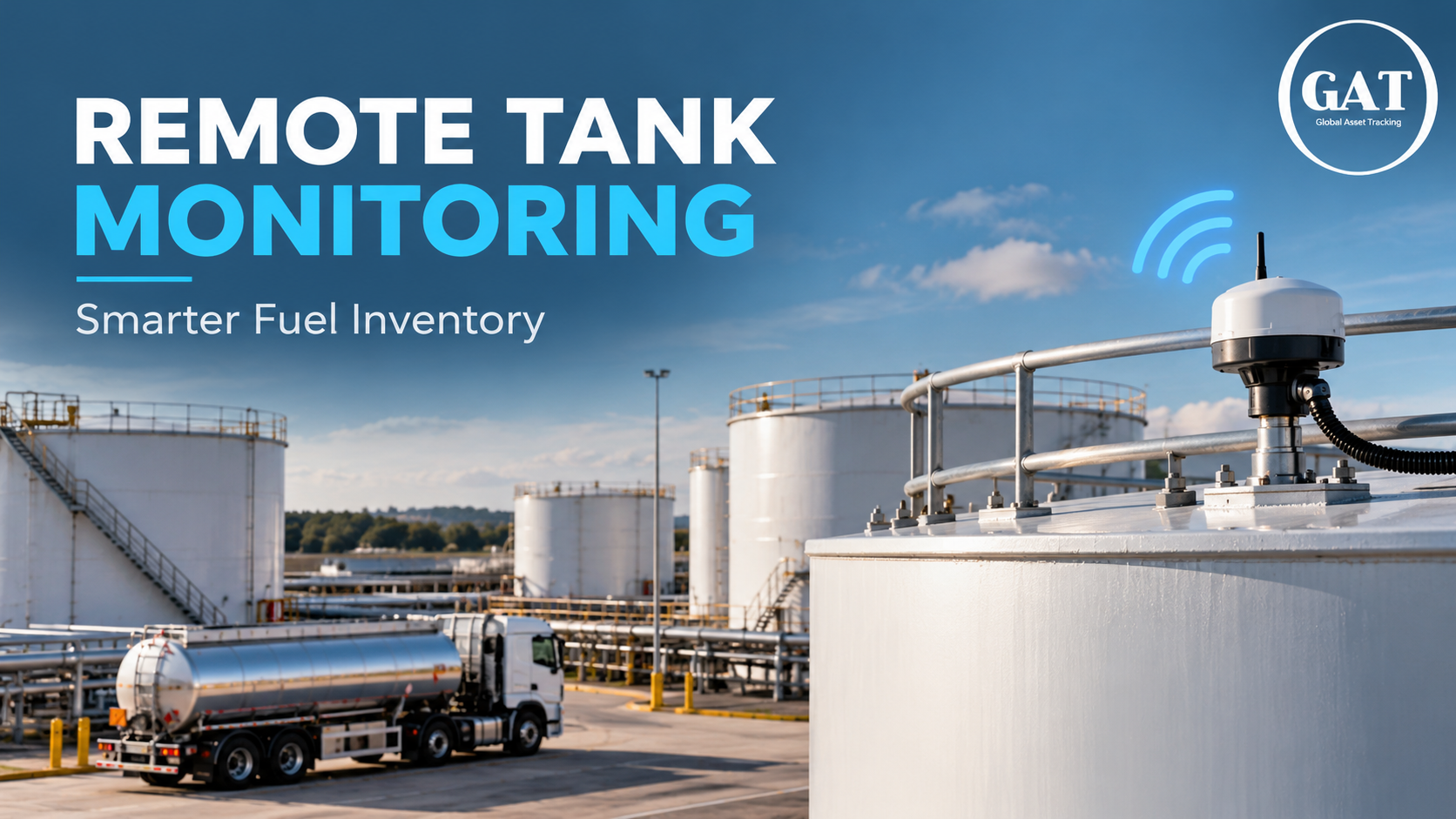
Remote Tank Monitoring for Fuel, Lubricants and Mining Operations
Remote tank monitoring helps fuel distributors track inventory across customer site, reduce avoidable emergency deliveries, and improve replenishment planning. Discover how GAT Solutions supports better fuel inventory visibility through remote tank monitoring, daily reporting, & 4G or satellite connectivity.
What Is Remote Tank Monitoring?
Remote tank monitoring is a technology-based approach to checking the level or status of liquid stored in a tank without needing someone to inspect it physically every time.
Depending on the equipment and system configuration, sensors can measure tank levels and transmit readings to a central platform through a suitable communications network. Authorised users can then review available information remotely.
A typical remote tank monitoring system may include:
- Level sensors: Measure liquid levels using technology suited to the tank and stored product.
- Communication equipment: Transfers readings to a monitoring platform.
- Monitoring software: Displays tank information and historical readings.
- Alerts and notifications: Help notify relevant personnel when configured thresholds or conditions are reached.
- Reporting tools: Support inventory planning and operational analysis where available.
The capabilities of each system depend on the sensors, communications infrastructure, software and installation requirements.
Why Is Remote Tank Monitoring Important?
Businesses that depend on fuel and lubricants need reliable information about stock availability. Without adequate visibility, teams may discover low tank levels only when a delivery is needed urgently.
Remote monitoring helps provide earlier insight into inventory conditions.
1. Improve Fuel and Lubricant Visibility
When tanks are spread across different locations, obtaining accurate information can be challenging. Remote monitoring allows teams to review available readings from a central location instead of relying exclusively on physical inspections.
This can be particularly useful for mining operations, remote depots, transport yards and industrial facilities where tanks may be located far from the main office.
2. Plan Replenishment More Effectively
Tank-level information can help operations teams identify when stock is approaching a predefined threshold. This gives staff an opportunity to review delivery requirements and coordinate replenishment before a shortage affects day-to-day activities.
For example, a mining site that consumes diesel continuously can use available tank readings to support delivery planning based on usage, remaining stock and expected supply lead times.
Remote monitoring does not replace sound inventory planning, but it can provide additional information to support it.
3. Reduce Unnecessary Manual Inspections
Regular tank inspections can require staff to travel between facilities, particularly when storage locations are spread over a large geographic area.
Where suitable monitoring equipment is installed, remote readings can reduce the need for some routine inspection trips. Physical inspections may still be necessary for maintenance, safety checks, calibration and verification.
4. Support Operational Continuity
A shortage of fuel or essential lubricants can affect equipment availability, transport schedules and production activities.
Monitoring tank levels can help teams recognise potential supply issues earlier and coordinate an appropriate response. The value is especially clear at sites where replenishment takes time or where an unexpected interruption could affect several operational teams.
How Does a Remote Tank Monitoring System Work?
Although system designs vary, most remote monitoring solutions follow a straightforward process.
Step 1: Measure the tank level
A compatible sensor measures the liquid level or another relevant tank parameter. The appropriate technology depends on the tank design, liquid properties and operating environment.
Step 2: Transmit the readings
The monitoring device sends collected information through an available communications network. Network coverage, transmission frequency and site conditions can influence system performance.
Step 3: View information remotely
Readings are made available through a monitoring platform or dashboard, allowing authorised personnel to review tank status without always visiting the site.
Step 4: Review alerts and trends
Where supported, users can configure notifications for specific level thresholds or other monitored conditions. Historical data may also help teams understand consumption patterns and identify unusual changes.
Step 5: Coordinate replenishment
Operations teams use the available information alongside delivery schedules, consumption forecasts and supplier lead times to make replenishment decisions.
For more information about asset visibility and monitoring, visit GAT’s website to explore its solutions and services.
Industries That Can Benefit from Remote Tank Monitoring
Mining and Resources
Mining operations often depend on a consistent supply of diesel, lubricants and other essential liquids. Monitoring tanks across remote sites can help teams understand stock availability and coordinate replenishment.
Transport and Logistics
Fleet operators and transport depots may use substantial quantities of fuel. Tank-level visibility can support stock planning and help depot managers coordinate deliveries with operational demand.
Manufacturing and Industrial Facilities
Manufacturing sites may store lubricants, fuels and process liquids required for routine operations. Monitoring these tanks can provide useful inventory information for maintenance and production teams.
Agriculture
Agricultural businesses may operate fuel storage tanks across farms and equipment yards. Remote monitoring can help staff check available stock without travelling to each tank for every routine reading.
Bulk Lubricant Storage
Businesses that store lubricants in bulk can benefit from better visibility into product availability, particularly when multiple tanks supply different machines, workshops or operating locations.
The suitability of a monitoring solution depends on the application, tank specifications and environmental conditions.
What Should You Consider When Choosing a Tank Monitoring Solution?
Selecting a suitable system requires more than comparing sensor prices. Businesses should consider the practical requirements of their sites and the information their teams need.
- Tank compatibility: Confirm that the selected sensor is suitable for the tank dimensions, construction and stored liquid.
- Measurement accuracy: Understand the expected accuracy and the conditions that can affect readings.
- Communications coverage: Check whether the site supports the required network or whether additional equipment is needed.
- Environmental conditions: Consider temperature, weather exposure, vibration, dust and other site-specific factors.
- Alert configuration: Determine which thresholds and notifications would be useful for your operations.
- Data access: Review dashboard functionality, reporting options and user access requirements.
- Installation and maintenance: Understand installation requirements, ongoing servicing and calibration needs.
- Integration requirements: Check whether the system needs to connect with existing inventory, fleet or operational software.
A solution selected around real operating requirements is more likely to provide useful information and support long-term performance.
Common Challenges Remote Monitoring Can Help Address
Businesses managing tanks manually may experience inconsistent inspection schedules, delayed stock updates, limited visibility across locations and difficulty coordinating deliveries.
Remote tank monitoring can help address these challenges by making tank-level information available more conveniently. However, it is important to establish clear processes for responding to alerts, checking sensor performance and investigating unexpected readings.
Reliable results depend on appropriate equipment selection, correct installation, communications availability and ongoing maintenance. Monitoring technology should complement established safety procedures and physical inspections rather than replace them entirely.
How GAT Can Support Your Monitoring Requirements
Global Asset Tracking (GAT) provides asset tracking and monitoring solutions for businesses that need better visibility across their operations.
The right approach depends on your site locations, equipment, monitoring objectives and operational requirements. Before choosing a solution, consider which tanks need monitoring, how frequently information is required and how your team will use the readings to support inventory and delivery decisions.
To discuss your requirements, visit GAT’s website and contact the team about a suitable solution for your application.
Frequently Asked Questions
What is the main purpose of remote tank monitoring?
Its main purpose is to provide remote visibility into tank levels or other monitored parameters, helping businesses manage inventory and plan replenishment.
Can remote tank monitoring be used at mining sites?
Yes, suitable systems can be used at mining sites, subject to sensor compatibility, communications coverage, installation requirements and environmental conditions.
Does remote tank monitoring eliminate physical inspections?
No. It can reduce the need for some routine checks, but physical inspections, maintenance and safety procedures may still be required.
Can tank monitoring help prevent stock shortages?
It can help teams identify low stock levels earlier and plan replenishment. Actual results depend on accurate readings, appropriate alert settings, delivery lead times and how quickly teams respond.
What information is needed before selecting a system?
Useful details include tank dimensions, stored liquid, site location, communications coverage, required measurement accuracy and the reporting or alert functions your team needs.
Conclusion
Remote tank monitoring gives businesses another way to improve visibility into fuel and lubricant storage. By making tank-level information available remotely, suitable systems can support replenishment planning, reduce reliance on routine manual checks and help teams manage inventory across multiple locations.
The most effective solution is one that matches the operational environment, provides useful and reliable data, and fits into existing inventory and maintenance processes.
If your business wants to improve visibility across fuel, lubricant or industrial storage operations, visit GAT to discuss your monitoring requirements and explore the available options.